A customer brought in a few pictures we had framed a couple of years ago to switch out the artwork. I was surprised the foam core backing had yellowed considerably. Our shop only stocks acid-free and archival products. The artwork was backed with rag matboard so the artwork wasn't damaged. There was a paper dust cover on the back of the frame. The specs for the matboard list it as having acid-free paper on both sides. Why would it yellow? Should I be concerned about this product? I know the foam center can yellow, but I didn't think the surfaces would. Most of the frames had 3/16" foam core, but one had 1/8", and it had yellowed similarly, so I can't blame it on a bad box.

Unfortunately, you are using an out of date browser which is not fully compatible. It may not display this or other websites correctly.
You should upgrade or use an alternative browser.
You should upgrade or use an alternative browser.
Acid-Free Foam Core Yellowing?
- Thread starter Echobelly
- Start date

The problem is the expanded polystyrene core, because there probably is no way to prevent that chemically-nasty plastic from outgassing through paper. That happens faster when any destructive elements are present, such as heat, light, or moisture. In my opinion, there is no such thing as “archival” or “acid free” foam board, regardless of what you do to the paper coverings.
David Hewitt
MGF, Master Grumble Framer
During my years of framing I always felt ARTCARE was a superior product compared to other brands of foam core boards. Do you recall the brand you're having issue with? Also would like to know what kind of enviourment the item lived in?
I had read (probably on here) that the foam does outgass, but the gases aren't damaging to paper, only the foam core itself. Since the paper backing has yellowed, I'm questioning this. Most of the art we frame is put on the foam core unless it's especially valuable, now I'm worried about damage to the art. Prices have gone up so much recently I hesitate to make it standard practice to back artwork with 2-ply rag and adding to the cost.The problem is the expanded polystyrene core, because there probably is no way to prevent that chemically-nasty plastic from outgassing through paper. That happens faster when any destructive elements are present, such as heat, light, or moisture. In my opinion, there is no such thing as “archival” or “acid free” foam board, regardless of what you do to the paper coverings.
We've always used Larson/Juhl acid free foamcore. We're in Florida, the pictures (11 total) have been hung in an airconditioned condo.During my years of framing I always felt ARTCARE was a superior product compared to other brands of foam core boards. Do you recall the brand you're having issue with? Also would like to know what kind of enviourment the item lived in?
David Hewitt
MGF, Master Grumble Framer
My business was in Florida also. Larson Juhl was my favorite supplier, however I didn't care for some of "their" brand of products such as foam or matboards.
I looked at this Rabbit Hole as this: Good,Better, Best. My standard was good, and it never went lower than that. Good was Artcare foam, Alpamat Boards and Conservation clear Tru View glass. Package was sealed with J-Lar tape and Dustcover was the blue stuff. I felt I used appropriated measures for the task at hand, at a fair and reasonable price point. My best was, I got myself certified as a MCPF, and framed accordingly. Never did I feel I did any injustice. I can say now with that using the standard practice "Good", that now I have items that are 45 years old still looking as new with proper care and environment and with Inspection every 7-10 years.
I looked at this Rabbit Hole as this: Good,Better, Best. My standard was good, and it never went lower than that. Good was Artcare foam, Alpamat Boards and Conservation clear Tru View glass. Package was sealed with J-Lar tape and Dustcover was the blue stuff. I felt I used appropriated measures for the task at hand, at a fair and reasonable price point. My best was, I got myself certified as a MCPF, and framed accordingly. Never did I feel I did any injustice. I can say now with that using the standard practice "Good", that now I have items that are 45 years old still looking as new with proper care and environment and with Inspection every 7-10 years.

Mary Beth van der Horst
SGF, Supreme Grumble Framer
I caught myself questioning my use of foamcore as a mounting board this morning and wondering if I should just pivot to mounting on alpha cellulose or rag mats instead. I opened up Crescent's new mountboard catalog to compare products and consider alternatives, just to see that ArtCare Foamboard is listed in their Museum quality mounting board section. It is the brand I already exclusively buy and use, so maybe it's ok. I am bigtime dubious about every other brand and type of foamcore though.

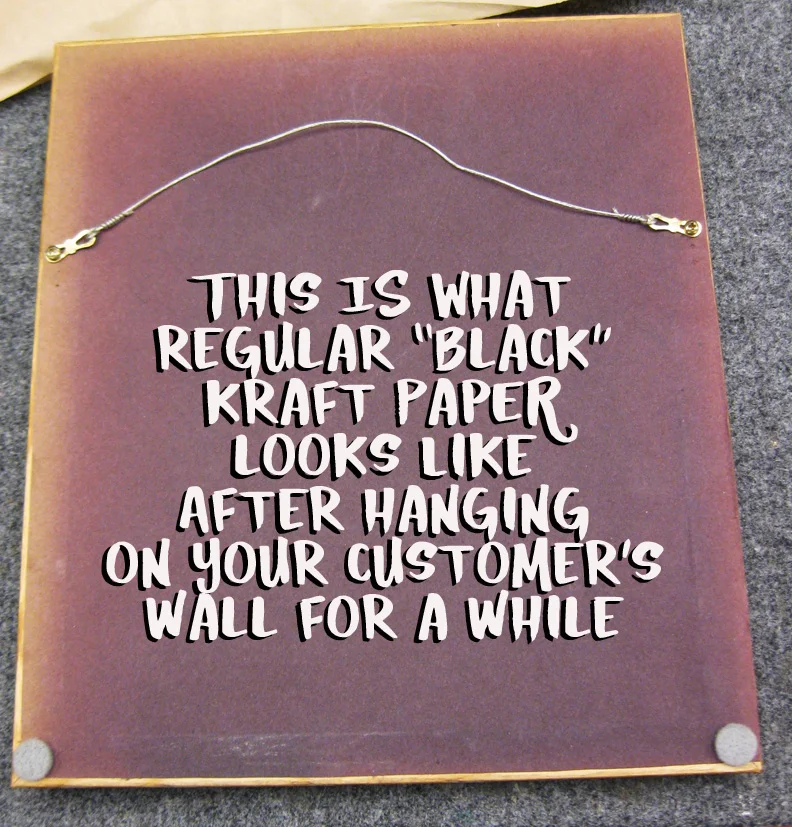
What kind of paper is the dustcover made of? If it is regular brown kraft paper, that might contribute to the FC backing yellowing as the kraft ages.We've always used Larson/Juhl acid free foamcore. We're in Florida, the pictures (11 total) have been hung in an airconditioned condo.
 Rick
Rick
Are the spaces lived in year-round or kept under STP HVAC if not? I've seen pieces in condo situations (my parents lived in one later in life) that suffered greatly from part time in-residence owners trying to save a few dollars by raising the threshold for air conditioning to 80F when they kept it at 74-76 while residing there.
As they say here in Florida, it's not the heat, it's the humidity.
HVAC removes a ton of water from the inside air, and a few degrees difference on the thermostat can make a big difference.
As they say here in Florida, it's not the heat, it's the humidity.
HVAC removes a ton of water from the inside air, and a few degrees difference on the thermostat can make a big difference.
It would be interesting to learn where that came from. My understanding is that the gasses emitted from the styrene can affect all paper products in the frame.I had read (probably on here) that the foam does outgass, but the gases aren't damaging to paper, only the foam core itself.
Preservation framing standards have always called for only alpha cellulose or cotton boards throughout the frame package, but fluted polypropylene has been approved as a reinforcement to backings.Most of the art we frame is put on the foam core unless it's especially valuable, now I'm worried about damage to the art.
2-ply matboard (rag or not) would not be a suitable barrier against chemical migration. The thicker and more dense the board, the longer total permeation would take, but it could still happen, eventually. Heat, light, and humidity amplify the rate of change.Prices have gone up so much recently I hesitate to make it standard practice to back artwork with 2-ply rag and adding to the cost.

I just took apart a large framed map. The back of the foam board was covered in yellow and brown spots. I believe the brown kraft paper caused it. What was on yours?
I thought of that, we use black kraft paper. The foam core is equally yellowed on each side, even the one against the rag board, so I don't think that's it.What kind of paper is the dustcover made of? If it is regular brown kraft paper, that might contribute to the FC backing yellowing as the kraft ages.
If that is "standard black kraft, it is essentially the same as the brown kraft. Years ago I used to use a latex-infused black kraft that was strong and durable. But in recent years I have been using the "acid-free" gray kraft that LJ sells.
 Rick
Rick
Rick